
 11 Page views
Published on Tue Dec 13 2022 | Money Control Floor Area Ratio (FAR) Floor Space Index (FSI) Maharashtra Noida Supertech Limited Supreme Court Bombay High Court Transit Oriented Development (TOD) Ministry Of Housing & Urban Affairs (MoHUA) Uttar Pradesh
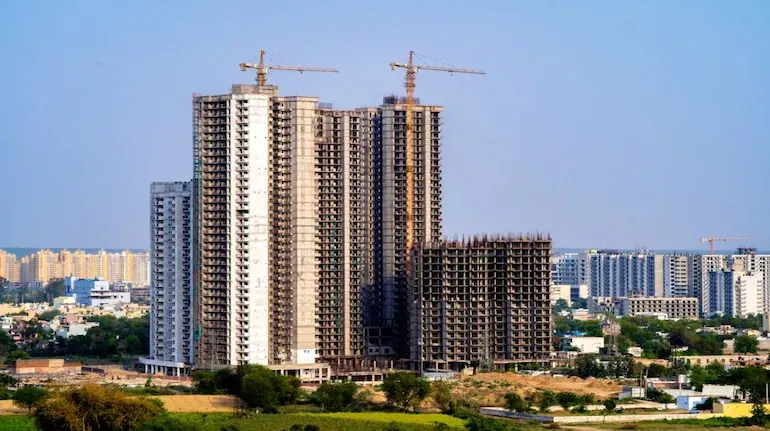
The FAR is back in the news because residents/buyers or resident welfare association (RWA)s are now staking claim on the additional FAR that comes to a housing society, after the builder has handed it over to the RWA.
Cases have been filed by consumer bodies/RWAs with the district deputy registrars, with consumer courts, as well as with the real estate regulatory bodies.
Such cases are rampant in Maharashtra where redevelopment norms are well evolved as urbanisation kicked off in the state way before it did in the rest of India.
FSI And Redevelopment
Normally redevelopment takes place when a layout or development is over 40-50 years old. In such cases, consumers or residents have to come together to seek approval for redevelopment. The FSI norms have been enhanced consistently across India, and today are much higher than when they were first given over half a century ago.
When a project comes up for redevelopment, the enhanced FSI allows it to either build bigger units, or more units. The extra units can then be sold to recover the cost of redevelopment. FSI linked to that land comes to the society only if the land rights have been transferred to it by the developer.
When a developer sells 51 percent of units in a project an Association of Allottees (AoA) has to be formed, and the project has to be handed over to them on completion of that phase. However, in most cases even after the possession certificates are secured, the developer does not transfer the land on which the project is standing to the RWA or the AoA. This is normally because all external development may not be completed, and some of it may be linked to other phases of the project. But in many cases the developer secures an adjoining plot which is contiguous to the project. This is then launched as a separate phase later, and the additional FSI/FAR, if any, is loaded on to the new project.
Consumers have increasingly protested builder excesses, and have been taking large builder organisations to court with dramatic results. The Supertech case in Noida, Uttar Pradesh, where two 40-floor structures were demolished as they violated the building norms, and did not have existing resident approval is the most dramatic. Here too the builder consumed the extra FAR/FSI of the project. In May, the Supreme Court stayed a Bombay High Court’s conditional approval to go ahead with two towers of Clover Highland’s Cooperative Housing Society on a protest by some residents. The lower courts had favoured the consumers while the Bombay High Court gave an order in favour of the builder. The apex court overturned it as consumers appealed.
Why Higher FSI
Higher FAR/FSI normally comes because of a Transit Oriented Development (TOD) policy. According to a Ministry of Housing & Urban Affairs (MoHUA) document, the extra FSI helps to densify the transit corridor. This would allow more jobs along the transport line, and more people to use the transit corridor, thus increasing ridership. An FAR of 300-500 percent ensures that more people live and work in the vicinity. To make this scheme attractive, the policy allows for higher land taxes, a one-time betterment fee, impact fee, or transfer of development rights (TDR).
When this extra FAR is availed by the developer as TDR and is transferred to a project far away, the very purpose of extra FAR along transit corridors for densification is defeated. Also, when the RWA or society looks for that extra FAR to densify their project during redevelopment, they find it has already been availed of by the builder. Urban specialist V Suresh maintains that the extra FAR should go to the RWA, once the project is handed over by the builder.

Delhi–Siliguri Bullet Train Announced: Via Lucknow, Varanasi And Patna, Travel Time To Drop From 20 Hours To 6

Delhi to Jewar Airport in 21 minutes: New RRTS corridor to link Noida Airport with Varanasi bullet train
L-G directs DDA to chart out plan to develop Dwarka into an international investment hub
New 10-Lane Delhi-Jewar Corridor Planned Ahead Of Noida Airport Launch
Now homeowners can file online complaint against builders for illegal transfer charges in Uttar Pradesh; Step-by-step guide on how to do it