 168 Page views
Published on Wed Jul 05 2017 | Hindustan Times Delhi Delhi Metro Aerocity Saket Tughlakabad Lajpat Nagar Rithala Bawana Narela Delhi Government Inderlok Delhi Gate Indraprastha Aam Aadmi Party Government Union Urban Development Minister M Venkaiah Naidu Delhi Metro Rail Corporation (DMRC)
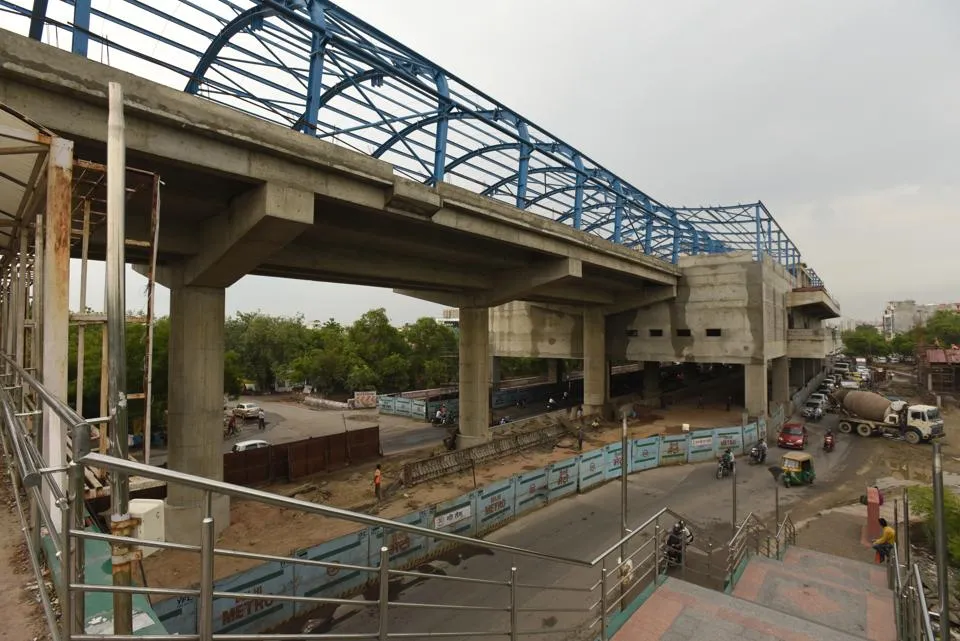
The Delhi Metro will have another first as it will operate nine-coach trains as part of its phase-IV network, which is currently awaiting approval from the Delhi government.
When it is completed in 2021, the total length of the metro network in Delhi will be 434 kilometres with 308 stations. The daily ridership through the network is likely to go up to 63 lakh from the current 28 lakh. In the two lines of phase-III, the trains can only be of six-coach as the length of the platforms is short.
Since ridership is expected to increase a lot, Delhi Metro Rail Corporation (DMRC) has planned to keep the length of the platform long enough to handle nine-coach trains.
“Only the length of the platforms of new/independent/stand-alone corridors have been proposed to have nine coaches. However, the corridors which are extensions of existing corridors or sections currently under implementation in Phase 3 will continue to have six coaches,” said a Delhi Metro spokesperson.
Delhi Metro has proposed six lines in phase-IV but only four of them are new lines, while two are extensions of existing lines. Currently, DMRC operates four-coach, six-coach and eight-coach trains, depending on the requirement.
The four corridors —Inderlok -Delhi Gate-Indraprastha, Aerocity-Saket-Tughlakabad, Lajpat Nagar-Chirag Delhi-Saket G Block and Rithala-Bawana-Narela —will have nine-coach trains.
“One coach can carry 300 passengers and overall capacity of Delhi Metro train will increase if we have more coaches. Initially, we will start with four or six coach trains, depending on the requirement and later, whenever we feel that there is congestion, we will press nine-coach trains,” said a Metro official.
The DMRC has already tendered for the topographical survey of these lines. The phase-IV Metro will connect the city to outer parts of the Capital and bolster connectivity to the airport. It will also better connectivity with Old Delhi.
“In phase-III, where we have two fresh lines, we won’t be able to operate more than six-coach trains. However, we will make it up with phase-IV as the capacity of the train will be increased by 50%,” the official added.
These lines, in addition with the 140 kilometres of Metro network added in Phase III, are expected to free up traffic bottlenecks in the congested central and south parts of the city and help passengers from outer Delhi.
The DMRC is hopeful that problem of overcrowding will be solved when these lines of phase-III and phase-IV become operational.
The Delhi and the Central governments were on loggerhead over the line, but in January, the Delhi government gave cabinet approval to it. Usually 70% of the cost of metro projects is paid by loan and 15% each is shared by the Delhi and Central government. However, the project is in controversy due to another difference between the Centre and the Aam Aadmi Party government over funding mechanism.
While approving the Rs50,000-crore project in January, the city government had sought exemption from paying its share of the subordinate debt for central taxes that amount to Rs 3,098 crore. Or, it wanted Delhi’s share of state taxes for the project written off.
However, the demand was rejected by Union urban development minister M Venkaiah Naidu.

Delhi–Siliguri Bullet Train Announced: Via Lucknow, Varanasi And Patna, Travel Time To Drop From 20 Hours To 6

Delhi to Jewar Airport in 21 minutes: New RRTS corridor to link Noida Airport with Varanasi bullet train
L-G directs DDA to chart out plan to develop Dwarka into an international investment hub
New 10-Lane Delhi-Jewar Corridor Planned Ahead Of Noida Airport Launch

Now homeowners can file online complaint against builders for illegal transfer charges in Uttar Pradesh; Step-by-step guide on how to do it