 3 Page views
Published on Fri Sep 12 2025 | Metro Rail News Navi Mumbai Mumbai Konkan Maharashtra New Bombay City and Industrial Development Corporation of Maharashtra Limited(CIDCO) Mumbai Metropolitan Region(MMR) Thane Navi Mumbai Metro Maha Metro Konkan Railway Corporation Limited(KRCL) Belapur Pendhar
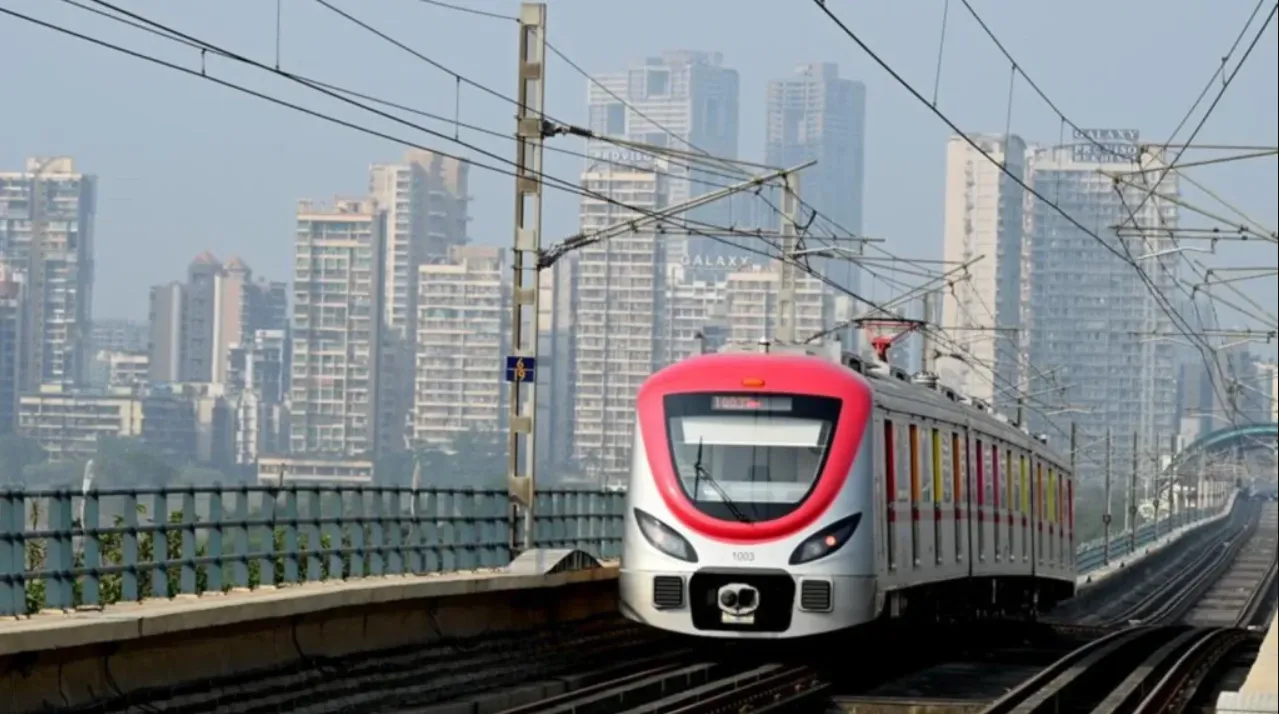
Navi Mumbai is a major planned satellite city located on the mainland adjacent to Mumbai, in the Konkan division of Maharashtra, India. Formerly known as New Bombay until 1995, the city was developed in the early 1970s to ease the growing population and infrastructure burden on Mumbai. It was designed and developed by the City and Industrial Development Corporation of Maharashtra (CIDCO), with contributions from renowned architects and urban planners such as Charles Correa, Pravina Mehta, and Shirish Patel.
Navi Mumbai lies in the Thane district and forms part of the Mumbai Metropolitan Region (MMR). Over the years, it has grown into a major hub for business and education, hosting numerous multinational corporations, IT and industrial parks (including the Millennium Business Park), and several prominent educational institutions. The city is also known for its emphasis on cleanliness and sustainability. It consistently ranks among the cleanest cities in India, securing third place in the Swachh Survekshan survey in both 2022 and 2023, and is currently ranked 5th nationally for clean air.
The Navi Mumbai Metro was conceptualized to address the challenges of urban growth, connectivity, and traffic congestion in Navi Mumbai, a rapidly expanding satellite city designed to decongest Mumbai. The key reasons behind establishing the metro system include:
1. Alleviating Traffic Congestion: Navi Mumbai, despite being a planned city, experienced traffic congestion due to its role as a transit hub for Mumbai and its own growing population and infrastructure development. Over the years, this expansion led to a surge in private vehicle registrations, further straining road capacity.
2. Rapid Urbanisation: Rapid urbanisation in Navi Mumbai has been a driving force behind the need for the metro system. As the city expanded rapidly with a growing population, increased housing, and booming commercial zones, the demand for efficient public transport became urgent. As of 2025, Navi Mumbai boasts a population of approximately 1.63 million and holds the 6th position in the Ease of Living Index.
The metro system was envisioned as a fast, efficient, and eco-friendly alternative to road transport. By providing high-capacity public transit, it reduces the reliance on private vehicles, thus easing congestion in the city. As of 24th June 2024, a total of 43,08,147 passenger journeys have been recorded since the commencement of the Navi Mumbai Metro, which highlights the shift from private vehicles to public transit in the city.
Overview
Intervention by Maha Metro
| In June 2024, Konkan Railway Corporation Limited (KRCL) took over the operations and maintenance responsibilities of Navi Mumbai Line 1. |
| Speed and Track | Top Speed: 80 kmph |
| Average Speed: 34 kmph | |
| Standard Gauge: 1435 mm | |
| Electrification | 25 kV, 50 Hz AC OHE |
| Signalling | Cab Signalling/Distance to Go |
| Rolling Stock | 24 coaches (8 train-sets x 3) supplied by CRRC |
| Estimated Daily Ridership | 1 lakh/day (2027) |
| Contract | Contractor / Status |
| GC: General Consultant of Navi Mumbai Metro | Louis Berger – Balaji Railroad System JV |
| Rolling Stock contract for 24 coaches (8 trains of 3 cars) | CRRC Zhuzhou Locomotive Co., Ltd |
| Signalling, Telecommunications, Automatic Fare Collection (AFC) | Ansaldo STS |
| Civil Package CA-1: Construction of 4.91 km viaduct from Khargar Sector 14 – Pendhar | NCC Ltd. |
| Civil Package CA-2: Construction of 4.34 km viaduct from Belapur to Khargar Sector 14 | J Kumar Infraprojects |
| Civil Package CA-12: Construction of 6 stations at CBD Belapur, Sector 7, CIDCO Science Park, Utsav Chowk, Sector 11 & Sector 14 | San José Constructora – Mahavir Roads – Supreme Infra JV |
| Civil Package CA-13: Construction of 5 stations at Central Park, Pethpada, Sector 34 Kharghar, Panchanand & Pendhar | San José Constructora – Mahavir Roads – Supreme Infra JV |
| NM-Geo: Geotechnical Investigation for Navi Mumbai Metro Line-2 and Line-3 | Zed Geotech Pvt. Ltd. |
Overview
Currently, Line 1 of the Navi Mumbai Metro Rail Project is operational. The operational Line 1 of Navi Mumbai Metro spans 11.1 km between CBD Belapur and Pendhar through 11 stations. Construction work on Navi Mumbai Metro’s Line-1 started in November 2011. The Commercial Operation of Navi Mumbai Metro Line-1 started on 17 November 2023 for the public of Navi Mumbai.
Route Details
Line-1: CBD Belapur – Pendhar
The Navi Mumbai Metro is set for expansion with proposed Lines 2, 3, and 4, which are all extensions of the existing operational Line 1. In June 2019, CIDCO gave an in-principle approval to entrust DMRC with implementing the city’s Line-2 and Line-3.
| Line | Route | Cost | Length | Stations |
| Line 2(Extension of Line 1) | Taloje MIDC – Khandeshwar | Rs. 2820.20 cr | 7.12 km | 6 |
| Line 3(Extension of Line 1) | Taloje MIDC – Pendhar | Rs. 1750.14 cr | 3.87 km | 3 |
| Line 4 (Extension of Line 1) | Khandeshwar – Navi Mumbai International Airport (NMIA) | Rs. 1270.17 cr | 4.17 km | – |
In a major advancement towards integrated urban mobility, the CIDCO launched a QR-based paper ticketing system for Navi Mumbai Metro Line-1 on 22 June 2025, which went live on 24 June. This move aims to enhance commuter convenience, improve fare management, and support the transition to a more efficient, technology-driven transit network.
1. Enhanced Connectivity
2. Reduced Traffic Congestion
3. Economic Growth
4. Delay in Project
The Navi Mumbai Metro represents a transformative leap in the city’s journey from a planned satellite city to a modern smart city. While its development has faced several delays and challenges, the successful launch and operation of Line 1 mark a milestone in Navi Mumbai’s public transport infrastructure. Line 1 of the Navi Mumbai Metro Rail Project has improved mobility, reduced traffic congestion, and boosted economic activity in key areas like Kharghar and CBD Belapur. The proposed future network of Navi Mumbai aims to extend connectivity to key areas like Taloje MIDC and the Navi Mumbai International Airport. With continued expansion and efficient operation, the Navi Mumbai Metro is set to become the backbone of the city’s sustainable urban mobility and future grow

Delhi–Siliguri Bullet Train Announced: Via Lucknow, Varanasi And Patna, Travel Time To Drop From 20 Hours To 6

Delhi to Jewar Airport in 21 minutes: New RRTS corridor to link Noida Airport with Varanasi bullet train
L-G directs DDA to chart out plan to develop Dwarka into an international investment hub
New 10-Lane Delhi-Jewar Corridor Planned Ahead Of Noida Airport Launch

Now homeowners can file online complaint against builders for illegal transfer charges in Uttar Pradesh; Step-by-step guide on how to do it