 625 Page views
Published on Fri Dec 27 2024 | Hindustan Times Mumbai Chhatrapati Shivaji Maharaj International Airport (CSMIA) Navi Mumbai International Airport (NMIA) Mumbai Metropolitan Region (MMR) Panvel Mumbai Metropolitan Region Development Authority (MMRDA) Telangana Bandra Wadala Ghatkopar Thane Kapurbawdi Maha Mumbai Metro Operation Corporation Limited Brihanmumbai Electric Supply and Transport (BEST) Kasarvadavli Gaimukh Mumbai Metro Worli Ram Mandir Goregaon
Mumbaikars can expect a new airport, enhanced metro routes, bus and local train services as well as a long-overdue municipal corporation elections
Mumbai: The passenger and air traffic load on the existing Chhatrapati Shivaji Maharaj International Airport (CSMIA) will ease by 2025, as the much-awaited Navi Mumbai International Airport (NMIA) is scheduled to begin commercial operations by May 2025, with one terminal and one runway.
In October, the Indian Air Force aircraft successfully landed on the 3,700-mt runway. The airport is expected to handle passenger capacity of 20 million and 0.8 million cargo every year. More than 80% of the terminal building is also ready.
As the second international airport for the Mumbai Metropolitan Region (MMR), NMIA was planned to reduce the burden on Mumbai airport, the second busiest in the country – it handled 52.8 million passengers in FY 2024 against 43.9 million in FY 2023.
Spread over 1,160 hectares, the largest greenfield airport in the country is designed to handle 90 million passengers and 2.6 million tons of cargo annually. The airport will have parking facilities for 350 aircraft, two parallel runways and two full-length parallel taxiways for separate movement of aircraft.
The ₹18,000 crore airport is being developed through a public private partnership by NMIA, a special-purpose vehicle formed by Adani Airports Holdings Limited and CIDCO. The airport will be named after late Dinkar Balu Patil, a former MP and activist who led several protests by farmers and land owners in Navi Mumbai when the Maharashtra government acquired land in the area in the 1970s and 1980s to build the planned city.
Every day, between 65 to 70 lakh commuters travel by local trains on the Western and Central lines – the fortunate squeezed into overcrowded coaches, the not-so-fortunate dangerously hanging on to their lives on the edge of the footboard, in peak hours. In the last two years around 5,000 people have died in rail-related accidents on both routes, as per data from GRP.
The pressure on the locals has continuously mounted, as citizens are pushed into distant suburbs of the Mumbai Metropolitan Region (MMR) for affordable housing, given Mumbai’s expensive real estate.
In order to alleviate commuter concerns, the railways have planned to introduce new non-AC and AC local trains, creating new routes, and expanding and laying new tracks, across rail corridors in Mumbai and MMR in 2025.
Foremost is laying the sixth rail line from Kandivali to Borivali that will be ready by March 2025. WR has completed laying the 5-6 rail lines till Kandivali connecting Bandra Terminus. The two new rail lines will improve punctuality because it will segregate suburban and non-suburban train corridors.
By the end of 2025, a new suburban rail corridor connecting Panvel and Karjat, the two ends of MMR, will be ready, which will reduce travel time between Karjat and CSMT by 20-30 minutes from the approximately two hours it takes now.
Following repeated demands, commuters can expect more AC local trains. Of the 10 new AC locals requested by WR and CR, each from the Railway Board, both have received one each.
Reviving monorail
The Mumbai Monorail, considered a white elephant for over a decade now, is likely to get a shot in the arm in 2025. The Mumbai Metropolitan Region Development Authority (MMRDA) has started receiving new train sets at its Wadala depot which will improve the frequency of its services along the 19.48-km Chembur-Wadala-Jacob Circle route.
MMRDA has planned to retain some existing rolling stock to give the transport system fresh life. Ten new trains will be introduced to reduce the headway from the present 15 minutes to about 7-10 minutes. The first train set has been delivered by the Telangana-based Medha Servo Drives, while more are expected to reach Mumbai in 2025. Once operational, this transport system will connect the eastern suburbs and south Mumbai.
At present, of the seven trains available, only five are put into service; one is kept on standby, while the other undergoes maintenance.
The daily ridership hovers between 17,000-18,000, but is expected to improve after additional services introduced, and metro lines 3 (Aarey-Bandra-Colaba) and 4 (Wadala-Ghatkopar-Thane-Kapurbawdi) become operational. Metro 3 will link monorail at Jacob Circle, while metro 4 will be integrated at Wadala’s Bhakti Park.
The Maha Mumbai Metro Operation Corporation Limited, an arm of MMRDA, is currently operating and maintaining the entire transportation system.
BEST foot forward
The century-old Brihanmumbai Electric Supply and Transport (BEST) Undertaking, the city’s second lifeline after the local train network, has been challenged with a dwindling fleet which has affected commuters as well as the public utility’s balance sheets.
BEST’s image took a beating recently when the driver of a wet lease bus rammed into multiple vehicles at Kurla, killing nine people and injuring 40, on December 9. Between April and November, BEST buses including those on wet lease have been involved in 35 accidents that have resulted in four deaths.
The gloom around the transport utility is likely to be lifted, as it has rolled out plans to increase the fleet to 8000 buses in FY 2025-26, from its present depleted number of 2,885 buses, of which a mere 985 are part of their owned fleet while 1,900 buses are run by wet lease operators. In the financial year starting March, BEST expects 5,115 new single and double-decker electric and air-conditioned buses.
After the incident in Kurla, the transport body has also moved its attention towards updated training modules for drivers, which is a part of its refurbished standard operating procedure. At least two electric buses will be inducted for training.
The undertaking’s electricity supply division also has a ₹6000 crore plan to replace 80-year-old underground power cables. Work, including upgrading substations and other power equipment, costing around ₹2,000 crore is expected to be undertaken in 2025.
6 metro lines to be operational
That Mumbai needs a separate mode of public transport -- the Mumbai metro –to reduce vehicular congestion and shave off load from local train network, was conceived over a decade ago.
The numbers speak for themselves – each day, suburban locals ferry approximately 6.5-7 million people. On the other hand, there are nearly 49 lakh vehicles in Mumbai of which approximately 60% comprise two-wheelers. The much-compromised Brihanmumbai Electricity Supply and Transport (BEST) Undertaking’s fleet has added to the pressure on other modes of public transport.
Come 2025, as many as six Mumbai metro lines will be partially or wholly operational to provide relief to commuting Mumbaikars. The six metro corridors are: 2B, 3, 4, 4A, 7A and 9.
On the 2B route, Andheri West to Mandale and Mandale to Diamond Garden stretches will be ready in June 2025, while the entire metro 2B with 19 stations will be ready in 2026
The second phase of the underground metro 3 from Bandra Kurla Complex to Cuffe Parade is likely to be ready by July 2025.
On Mumbai Metro 4 and 4A (Wadala to Kasarvadavli to Gaimukh), the stretch on Thane’s Ghodbunder Road, is likely to be operational by the end of 2025.
Mumbai Metro 7A from Gundavali to Chhatrapati Shivaji Maharaj International Airport will connect Terminal 2 and existing Mumbai Metro 3 with the western suburbs creating a metro network with interchanges.
Mumbai Metro 9 from Dahisar East to Mira-Bhayander, which is an extension of the currently operational Mumbai Metro 7 on the northern side of the corridor will connect Mira-Bhayander with the rest of Mumbai. MMRDA intends to partially operationalise the metro line by June 2025 between Dahisar East and Kashigaon, a stretch having three of the total seven stations along the corridor.
Civic Elections: Poll Position
Of the people, for the people, by the people… Municipal corporators represent the voice of citizens, a direct line to the municipality, whose policies and functioning have a powerful impact the quality of our lives.
After nearly three years sans corporators, Mumbai is hoping that 2025 will be the year for the BMC elections. When the term of the city’s elected representatives ended on March 7, 2022, power was concentrated in the hands of a state-appointed administrator – the municipal commissioner - Iqbal S Chahal till March 2024 and Bhushan Gagrani since.
A system of checks and balances was replaced with a single decision-making authority, that too during the longest vacancy in the 150-year history of the country’s richest municipal corporation. Proposals were drawn up, approved and executed solely under their authority, without corporators present to debate and vote on budgets and the legion of issues that affects our daily lives.
But everything hinges on a Supreme Court hearing on the delimitation of civic wards, in January. If the case concludes, elections to Mumbai’s 227 wards can be held before the monsoon. “Corporators will increase the accountability, vibrancy and feedback mechanism in the municipality,” said Gagrani.
It will be interesting to see how the elections play out, politically. After the Mahayuti alliance’s strong showing in the recent assembly elections, the ruling coalition is eager – and a little restless – to seize power in the BMC as well. Traditionally, the Shiv Sena ruled the civic body, but after its split in 2022, the two Sena factions will be pitted against each other.
Coastal Road: Full Speed Ahead
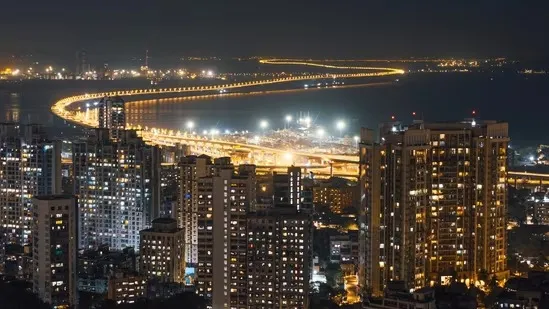
After decades in the planning, 2024 saw Mumbai’s Coastal Road being opened to traffic. It’s 11km of pure magic, quite literally converting hours into minutes as you drive without interruption from Marine Drive to Worli – overland and underground. The Coastal Road is one of Mumbai’s flagship infrastructure projects, and the Marine Drive-Worli stretch opened in a phased manner on March 11.
There’s still a long way to go, as this super-expressway will eventually extend from Marine Drive all the way to Palghar, a distance of 167km.
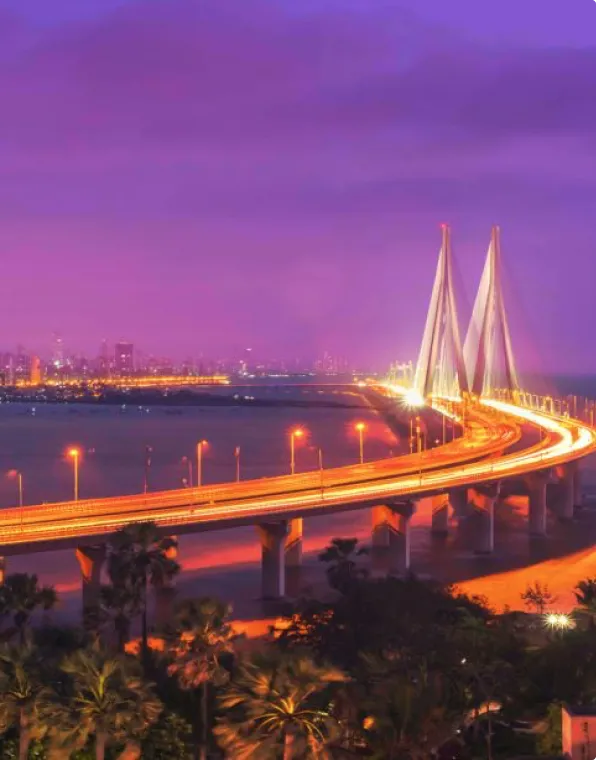
The next piece of this engineering marvel to be put in place is the south-bound connector between the Coastal Road and the Bandra-Worli Sea Link, on January 26. On November 27, the final span of the bow-string bridge was moved into place, another milestone in this colossal project. A seamless ride will then be possible from Marine Drive to Bandra. The last two of the eight arms of the Haji Ali interchange will open early next year.
Anticipation is also building for the 70 hectares of open spaces that will be created along the length of the coastal road, through massive land reclamation. Among these is a promenade that will forever change the city’s coastline. Also planned are sections and precincts with different themes, namely the Green Shore, Nature’s Cove and Park Line. But this will take a while. For now, in a city where gridlocked traffic regularly swallows hours of precious time, the focus is on providing Mumbai’s motorists a dream ride.
Concretisation: Hitting Roadblocks
If you thought the relentless excavating of the city’s streets and the plumes of dust thus exhumed would cease, forget it! Only 30% of phase 1 of the plan to concretise Mumbai’s roads was completed by June, 2024 – there is a long way to go.
Concretising Mumbai’s roads was a project initiated by former chief minister Eknath Shinde, as the solution to making the city pothole-free within two years. Announced in June 2022, the municipality cleared contracts worth ₹6,080 crore, for 397km of road. Five firms were awarded the contracts in January 2023, the largest civic contract to date.
But the plan is way behind schedule. Worse still, the plan for South Mumbai has run aground. A major contractor’s tender was terminated in January 2024, and fresh bids were invited. Work hasn’t even begun. The target for Phase 1 was thus revised to 324km, and limited to the western and eastern suburbs.
But even where concretisation is underway, work is moving at snail’s pace. Utilities under Mumbai’s streets are also posing a challenge. Now the BMC aims to complete Phase 1 by May 2025, a very optimistic deadline they’re unlikely to meet.
For citizens, this means another year of navigating endless traffic snarls, mountains of rubble underfoot, and worsening air quality.
Bridges: On the Fly
The new year will finally see the east-west connector, the Gopal Krishna Gokhale bridge, being completed, after numerous delays. The revised deadline is April 2025 and it’s likely to be revised further.
This is only one in a series of bridges – over railway tracks and the city’s streets – that will hopefully be thrown open to traffic in 2025, easing your daily commute. First in line are two rail over bridges (ROBs) – one connecting Worli Naka at Dr E Moses Road and Dhobi Ghat at Saat Rasta, and the other a cable-stayed bridge connecting Saat Rasta and Keshavrao Khade Marg. They are expected to the opened for motorists in February 2025, after an earlier deadline of 2023.
The next, perhaps by March, is an east-west connector, the Vikhroli ROB, connecting LBS Marg to the Eastern Express Highway. Work orders were first issued in 2018.
Next – if all goes to plan – will be the historic east-west Carnac ROB. The first girder was moved into place in October, and 80% of installation work for the second one is complete. The deadline is May 2025.
Another major flyover will be completed next year – the 840-mt extension of the Mrinal Gore flyover, from Ram Mandir to Goregaon (West). Extending above the congested S V Road and Oshiwara River and ending at Relief Road, the flyover is expected to cut travel time, from the Western Express Highway at Goregaon to the Link Road in Oshiwara, from 40 minutes to less than 10 minutes. It is unlikely to be completed before the end of the year.

Delhi–Siliguri Bullet Train Announced: Via Lucknow, Varanasi And Patna, Travel Time To Drop From 20 Hours To 6

Delhi to Jewar Airport in 21 minutes: New RRTS corridor to link Noida Airport with Varanasi bullet train
L-G directs DDA to chart out plan to develop Dwarka into an international investment hub
New 10-Lane Delhi-Jewar Corridor Planned Ahead Of Noida Airport Launch
Now homeowners can file online complaint against builders for illegal transfer charges in Uttar Pradesh; Step-by-step guide on how to do it