
 1370 Page views
Published on Sun Feb 15 2026 | Financial World Haryana Gurugram Palwal Bhiwani Charkhi Dadri Chandigarh Nuh Faridabad Panchkula Ambala Sonipat Panipat Rohtak Kurukshetra Kaithal Yamunanagr Fatehbad Hisar Sirsa
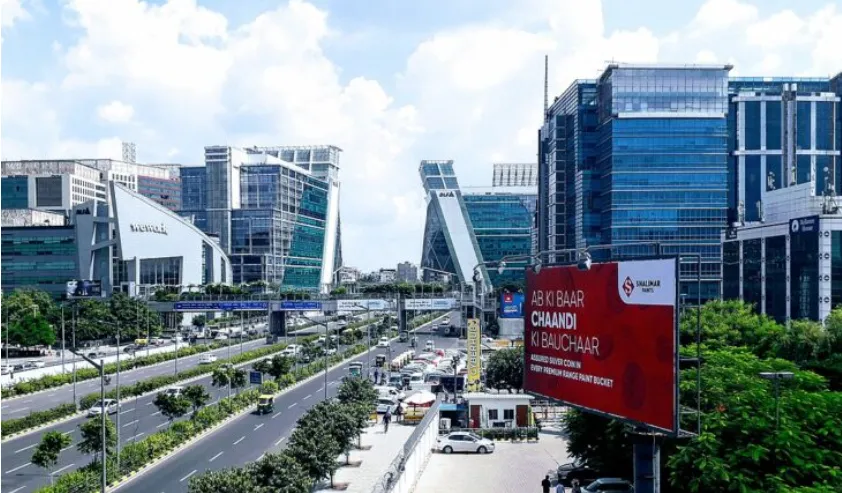
A study study as regard per capita income in Haryana reveals Gurugram is the richest district, while Nuh district lag behind is the poorest district in terms of per capita income and districts like Palwal, Bhiwani and Charkhi Dadri also have come in the category of low income levels. The latest data on per capita income for Haryana’s districts has revealed the true picture of the state’s economic development, and the pace of economic progress is not uniform across the state. Scenario reveals that per capita income has grown rapidly in industrial and urban districts, while the pace of development has remained relatively slow in many districts.
A study reveals, Karnal district’s per capita income increased by Rs 26,000 in four years, where 80,426 families in the state have become rich, said Haryana CM Nayab Saini Union Budget press conference in Chandigarh. “According to available data, Gurugram has emerged as the state’s most prosperous district with a per capita income of rupees 681,085, while Nuh lags behind with rupees 68,848 and this gap clearly reflects the unequal distribution of industrial development, investment, urbanization, and employment opportunities in the state, he said that these data clearly demonstrate that districts with expanding industry, service sectors, and infrastructure have experienced a surge in income, while rural and less developed areas have seen limited income growth due to limited economic opportunities. According to information Gurugram and Faridabad lead the Industrial Strength.
According to the available data, Gurugram is the highest-income district. The presence of the IT industry, corporate sector, real estate, and multinational companies has strengthened the district’s economic position. Faridabad is next with rupees 328,083 with a significant contribution from industrial units and the manufacturing sector. Panipat (rupees 281,365) is in third place known for its textile industry, refinery, and export-oriented trade. Panchkula (rupees 242,541) and Ambala (rupees 197,256) are also among the high-income districts, due to trade, service sectors and improved urban amenities have boosted income levels in these districts. There are many balanced Growth in middle-class districts in the state that have recorded moderate per capita income lSirsa
evels. These include Rewari (178,493), Jhajjar (175,949), Kurukshetra (173,694), Sonipat (171,697), Rohtak (153,276), and Karnal (151,608).
Similarly, in Kaithal (138,403), Yamunanagar (135,658), Hisar (129,135), Fatehabad (129,068), Jind (127,768), Sirsa (127,881), and Mahendragarh (124,535), income levels remain stable due to the combined impact of agriculture, small industries, and the service sector. Whereas Nuh, Palwal, and Bhiwani are at the bottom. Nuh lags behind in terms of per capita income. Districts like Palwal (90,602), Bhiwani (111,188), and Charkhi Dadri (117,759) also have relatively low income levels. Economic experts believe that the lack of large industrial investment, limited employment opportunities, limited opportunities for education and skill development and slow progress in infrastructure are the main reasons for low incomes in these districts. Over-reliance on the rural population and a lack of private investment also impact economic growth. According to economic experts, the main reasons for high per capita income in districts are industrial investment, corporate activities, improved road and transportation networks, urbanization, and the expansion of the service sector.
They said, in districts like Gurugram and Faridabad, IT, manufacturing, and private sector investment have led to rapid income growth. According to them, districts like Panipat, Karnal, and Hisar have also seen steady income growth due to agricultural productivity, market systems, and agriculture-based industries. On the other hand, districts with low incomes have a weak industrial base, limited employment opportunities, and a lack of skill development. Experts say that improving the economic condition of low-income districts is possible through education, industrial clusters, promotion of small industries, and expansion of infrastructure. Experts said that by adopting a policy of balanced regional development, Haryana can not only reduce income inequality but also contribute to national progress.a
L-G directs DDA to chart out plan to develop Dwarka into an international investment hub

Delhi–Noida commute set for major relief as 6-lane Chilla Elevated Corridor gains pace

Top 6 Emerging Areas in Greater Noida Where Property Prices Are Rising Sharply Due to Upcoming Jewar Airport

DDA extends payment deadline to June 30, 2026 for flats allotted under Towering Heights project in Karkardooma

World Bank Set To Approve Rs 2,800 Crore Loan For Gurugram Metro Phase II