
 257 Page views
Published on Sat Jun 07 2025 | Urban Acres Agra Agra Metro Tunnel Boring Machine (TBM) Mankameshwar Sikandra Taj East Gate Uttar Pradesh Metro Rail Corporation (UPMRC) Taj Mahal Agra Fort Fatehabad Road Metro Station Kanpur
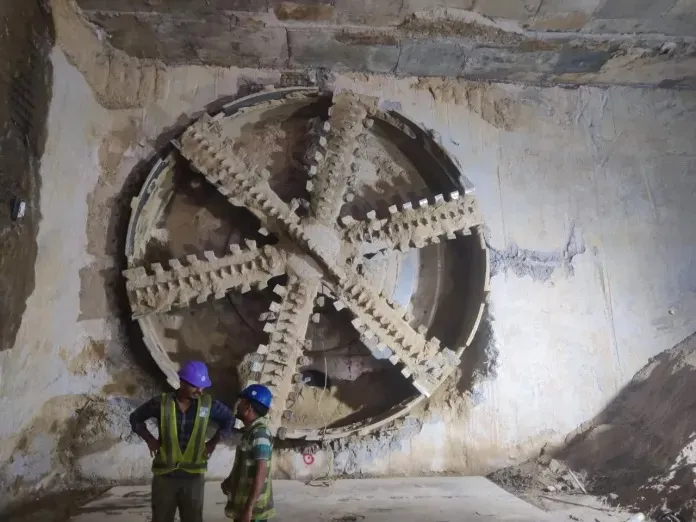
Agra has taken a decisive step forward in its transition to a modern, low-carbon urban mobility system with the successful breakthrough of the Tunnel Boring Machine (TBM) at Mankameshwar Station, marking the completion of all underground tunnelling work for Agra Metro Line 1.
This milestone, achieved under Package AGCC-02 of the Agra Metro project, is being hailed as a crucial leap in ensuring sustainable, high-capacity public transport connectivity across the historic city. With this development, the core underground civil engineering phase of the 14.25-kilometre Line 1—spanning Sikandra to Taj East Gate—is now substantially complete.Line 1, a central component of the Agra Metro Rail Project, aims to decongest one of India’s most visited heritage cities, offering an efficient, zero-emission alternative to private vehicle traffic in the congested tourist and academic zones. The breakthrough was executed by the Afcons – Sam India consortium, which was awarded the ₹1,819.79 crore contract in March 2022 by the Uttar Pradesh Metro Rail Corporation (UPMRC) with a 48-month timeline.
Package AGCC-02 involved construction of twin tunnels and seven underground stations—Taj Mahal, Agra Fort, Mankameshwar (Jama Masjid), SN Medical College, Agra College, Raja ki Mandi, and RBS College. The tunnels begin near Fatehabad Road Metro Station and end shortly after RBS College. The scope includes architectural finishes, electrical and mechanical systems, tunnel ventilation systems, and environmental controls—setting the foundation for a safe, smart, and climate-resilient metro corridor.Agra Metro’s infrastructure development is not only pivotal to the city’s urban evolution but also significant from the lens of inclusive growth. By connecting academic hubs, health institutions, tourist hotspots, and dense residential quarters, the line promises to reduce socio-spatial inequalities in access to safe transport.
Officials note that the tunnelling success at Mankameshwar demonstrates the project’s engineering precision despite challenges posed by congested areas, heritage-sensitive zones, and soil variability. It also underscores UPMRC’s adherence to global standards in project execution, which has earned similar acclaim during the Lucknow and Kanpur Metro constructions.For Agra—where over 11 million tourists annually strain road-based infrastructure—such transit transformation is long overdue. The operationalisation of Line 1 is expected to substantially lower carbon emissions from daily vehicular congestion and help preserve air quality around the Taj Mahal and other key monuments.
Equally critical is the long-term integration of the metro with feeder systems, non-motorised transport, and last-mile connectivity, especially in underdeveloped zones. City planners are keen to leverage this breakthrough to ensure smoother interchanges and intermodal accessibility across the wider transport grid.
With tunnel boring now behind them, project teams are moving into the next phase: system installation, architectural finishing, and trial runs. While officials remain cautiously optimistic about timelines, the successful delivery of Agra Metro is being positioned as a template for scalable, climate-conscious transit planning in heritage cities.

Delhi–Siliguri Bullet Train Announced: Via Lucknow, Varanasi And Patna, Travel Time To Drop From 20 Hours To 6

Delhi to Jewar Airport in 21 minutes: New RRTS corridor to link Noida Airport with Varanasi bullet train
L-G directs DDA to chart out plan to develop Dwarka into an international investment hub
New 10-Lane Delhi-Jewar Corridor Planned Ahead Of Noida Airport Launch

Now homeowners can file online complaint against builders for illegal transfer charges in Uttar Pradesh; Step-by-step guide on how to do it